Can TMS therapy lead to memory loss? No, extensive clinical research shows that transcranial magnetic stimulation does not cause memory impairment or cognitive damage. In fact, many individuals notice their focus and mental clarity naturally improve as their depressive symptoms lift. TMS offers a gentle, non-invasive path to emotional relief without affecting your everyday memories.
Unlike electroconvulsive therapy (ECT), which can cause memory impairment, standard TMS has not demonstrated the same cognitive risks. However, memory changes during treatment may be related to depression, anxiety, medications, sleep disturbances, or other medical factors.
New or persistent memory problems should be evaluated by the treating clinician to determine their underlying cause.
Key Takeaways
- Understand the Evidence. Research generally does not show memory loss as a typical adverse effect of standard rTMS.
- Separate TMS From Other Factors. Depression, anxiety, sleep disruption, medications, and stress can all affect concentration and memory.
- Monitor New Changes. New, significant, or persistent memory problems should be discussed with the treatment provider rather than automatically attributed to TMS.
What Research Says About TMS and Cognitive Health
Current scientific evidence shows that memory loss is not an expected adverse effect of standard TMS therapy. Because TMS uses focused magnetic pulses that target mood-regulating circuits in the prefrontal cortex, it leaves long-term memory centers undisturbed. Most patients find that everyday cognitive functioning remains steady throughout their treatment sessions.
A systematic review examining the cognitive effects of rTMS found no evidence for cognitive adverse effects across the included studies. The review also reported that some studies found improvements in cognitive functions after rTMS.
Research published in General Hospital Psychiatry similarly reviewed 58 studies examining neurocognition and rTMS in depressive disorders and found that rTMS was associated with cognitive improvements in patients with major depressive disorder.
“rTMS improved cognition in MDD.”, PubMed
This does not mean that TMS improves memory in every patient. It means that the available research does not support the idea that standard rTMS routinely causes memory loss.
Why Do People Worry About Memory Loss With TMS?

The concern often comes from the fact that TMS is a treatment that directly stimulates the brain.
Patients may understandably wonder whether changing activity in brain regions involved in mood regulation could also interfere with memory or concentration.
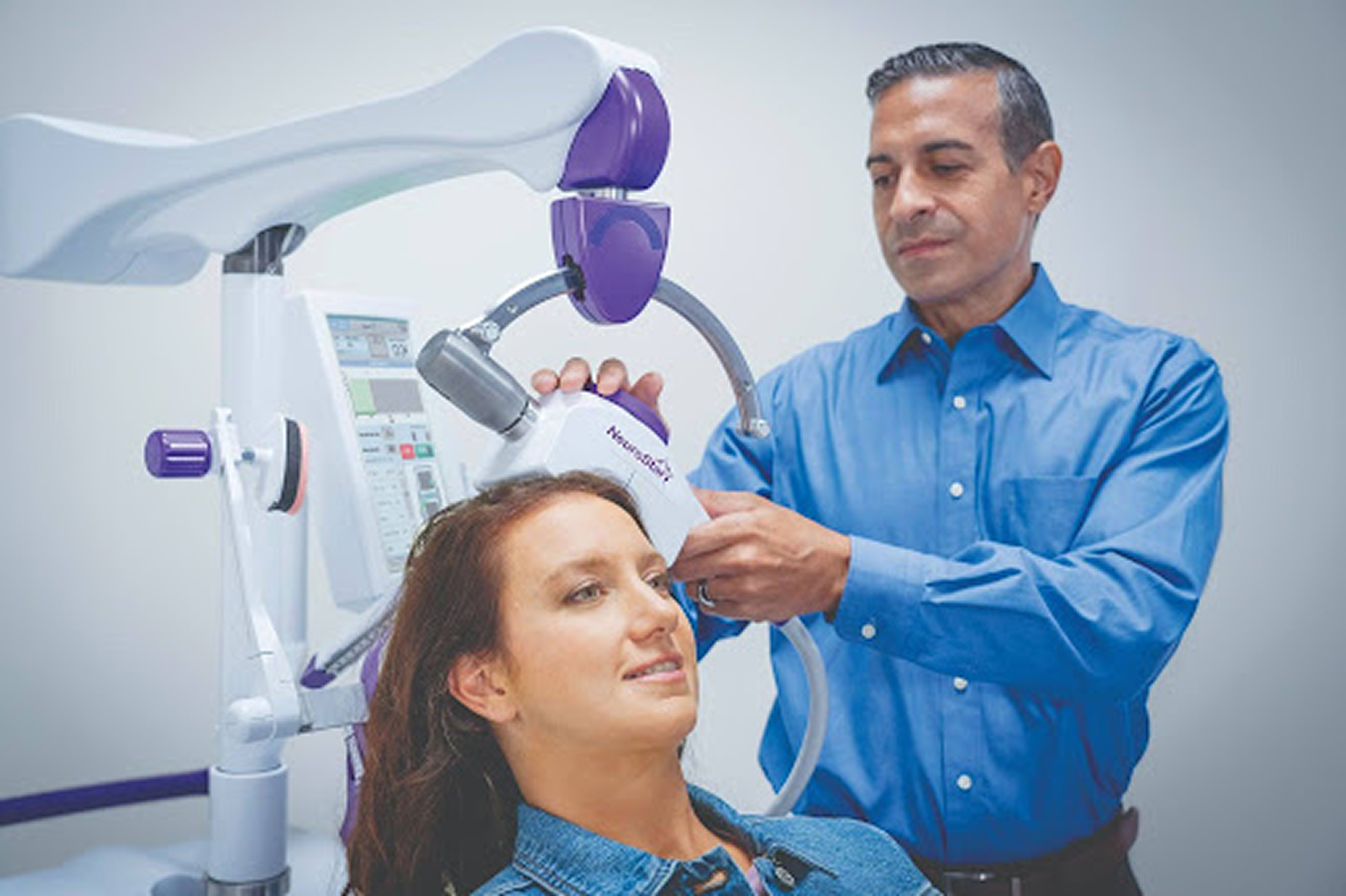
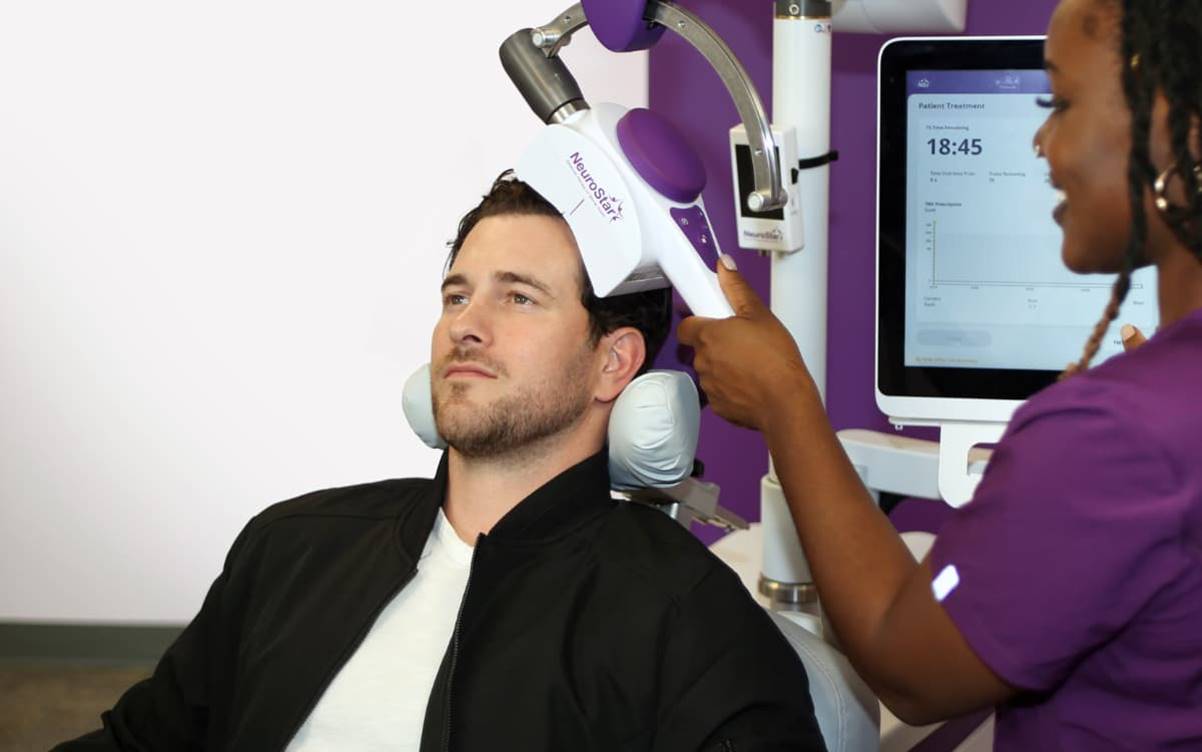
Much of the worry surrounding memory stems from confusion between TMS and Electroconvulsive Therapy (ECT). While ECT remains a distinct clinical tool that uses electrical stimulation under anesthesia and can cause temporary memory gaps, TMS functions very differently. TMS delivers gentle, localized magnetic pulses while you sit awake and comfortable in an office chair. Because TMS does not involve sedation or generalized brain stimulation, it does not share the memory-related side effects seen with ECT.
Does TMS Affect Short-Term Memory?
Current evidence does not suggest that standard TMS routinely damages short-term memory.
Memory is not a single cognitive function. It includes several processes, such as:
- Working memory
- Short-term memory
- Verbal memory
- Visual memory
- Episodic memory
- Long-term memory
- Recognition
- Recall
Research on rTMS has evaluated several of these domains.
A systematic review of rTMS in depression found that cognitive outcomes can change during treatment and that some studies reported improvements in memory and other cognitive functions.
This means that forgetting a name, losing track of a thought, or having difficulty concentrating during TMS does not automatically indicate that TMS has damaged memory.
Can TMS Affect Concentration?
TMS does not generally appear to cause a persistent decline in concentration.
In fact, cognitive functioning can sometimes improve when depressive symptoms improve.
Depression itself can affect:
- Attention
- Concentration
- Processing speed
- Working memory
- Motivation
- Recall
When depression becomes less severe, some patients may notice that they can concentrate more easily.
A systematic review of cognitive functioning in depression found evidence that rTMS may improve cognitive functioning alongside improvement in depressive symptoms.
If you are interested in understanding the stimulation process itself, this guide on how TMS works in the brain explains how targeted magnetic stimulation is used and how TMS fits into a broader treatment plan.
Can Depression Cause Memory Problems?

Yes.
This is an important part of understanding memory complaints during TMS.
Depression can be associated with cognitive symptoms, including difficulties with attention, concentration, memory, and executive functioning.
A person who begins TMS because of severe depression may already have cognitive symptoms before treatment starts.
As a result, a patient may notice memory problems during a TMS course without those problems necessarily being caused by the treatment.
For example, someone may forget appointments, lose their train of thought, struggle to remember recently read information, or have difficulty concentrating.
The timing of these symptoms matters, but timing alone does not establish causation.
Can Sleep Problems Affect Memory During TMS?
Yes.
Sleep plays an important role in attention, learning, and memory.
A patient undergoing TMS may experience changes in sleep because of their underlying psychiatric condition, changes in mood, stress, medication adjustments, or other factors.
Poor sleep can make someone feel:
- Forgetful
- Distracted
- Mentally slower
- Less attentive
- Less able to retain new information
For this reason, sleep should be considered when someone reports new memory problems during a TMS course.
Can Medication Cause Memory Problems During TMS?
It can depend on the medication.
Patients receiving TMS may also be taking antidepressants, anxiolytics, sleep medications, or other psychiatric medications.
Some medications can affect alertness, attention, or memory.
This means that a memory complaint occurring during TMS should not automatically be attributed to magnetic stimulation.
The clinician may need to consider:
- Medication changes
- Dose changes
- New medications
- Medication interactions
- Sleep changes
- Alcohol or substance use
- The underlying psychiatric condition
This is one reason TMS treatment is typically monitored as part of a broader clinical plan.
What Does Research Say About TMS and Cognition?
The research is generally reassuring, although it is not completely uniform.
A 2018 systematic review examined randomized controlled trials of prefrontal rTMS and cognitive function in depression, schizophrenia, and Alzheimer’s disease. The review found no evidence for cognitive adverse effects in the included rTMS studies.
A comprehensive systematic review published in 2022 evaluated 58 studies on neurocognition and rTMS in depressive disorders. The authors observed that rTMS was associated with measurable cognitive gains in individuals receiving care. For a deeper look at durability and cognitive safety over extended periods, explore our review on the long-term effects of TMS and what science shows.
“A routine cognitive assessment might stratify MDD patients and track rTMS related cognitive improvement.”, PubMed
The evidence therefore does not support describing memory loss as an expected effect of standard rTMS.
At the same time, research protocols differ in stimulation frequency, intensity, treatment target, number of sessions, patient population, and cognitive tests. These differences mean that results should not be generalized to every possible TMS protocol.
Does TMS Improve Memory?
It may, but this should not be presented as a guaranteed effect.
Some studies have reported improvements in memory and other cognitive functions following rTMS, particularly in patients whose depression improves during treatment.
However, the evidence is not strong enough to say that TMS is a memory-enhancing treatment for everyone.
A 2025 systematic review and meta-analysis of randomized controlled trials found no significant improvement in cognitive impairment with active rTMS compared with sham rTMS across several cognitive domains, including learning and memory.
This is an important distinction:
No evidence of routine memory loss does not mean TMS is guaranteed to improve memory.
The more accurate conclusion is that current evidence does not show standard rTMS to be a treatment that generally causes memory damage.
Can TMS Cause Brain Fog?
“Brain fog” is a non-specific term rather than a formal diagnosis.
People may use it to describe:
- Difficulty concentrating
- Forgetfulness
- Mental fatigue
- Slower thinking
- Difficulty finding words
- Feeling mentally distracted
- Difficulty completing familiar tasks
If someone experiences brain fog during TMS, the symptom deserves attention, but it does not automatically prove that TMS caused cognitive impairment.
The clinician may consider whether the symptom is related to depression, anxiety, sleep, medication, stress, treatment parameters, or another medical issue.
How Can You Tell Whether TMS Is Affecting Your Memory?

It can be difficult to determine the cause based on subjective experience alone.
A useful approach is to compare cognitive functioning before, during, and after treatment.
Consider tracking:
- Memory complaints
- Concentration
- Sleep
- Mood
- Anxiety
- Medication changes
- Treatment sessions
- Daily functioning
For example, if memory problems were present before TMS and improve as depression improves, the treatment may not be responsible for the original problem.
Conversely, if a new and significant cognitive change appears soon after treatment and persists, it is reasonable to report it to the treatment provider.
Should Memory Be Tested Before TMS?
Formal cognitive testing is not necessarily required for every patient receiving TMS.
However, cognitive assessment can be useful when a patient already has significant concerns about memory or concentration.
It can provide a baseline against which later changes can be compared.
Research has suggested that cognitive assessment may help clinicians monitor cognitive changes during rTMS treatment.
A clinician can determine whether formal testing is appropriate based on the patient’s symptoms and treatment plan.
What Side Effects Are More Common With TMS?

Memory loss is not among the typical side effects emphasized in current NeuroStar safety information.
The most commonly reported side effect is temporary pain or discomfort at or near the treatment site. Other reported adverse effects can include headache and discomfort around the stimulation area. NeuroStar also describes a rare seizure risk.
This does not mean that every patient will have the same experience.
Rather, it helps distinguish common physical treatment effects from cognitive concerns such as memory loss.
For a broader discussion of risks and tolerability, you can also read is TMS therapy safe?.
How Is TMS Different From ECT for Memory?

TMS and ECT are both brain-stimulation treatments, but they are fundamentally different procedures.
ECT induces a controlled seizure while the patient is under anesthesia. Memory impairment is a recognized cognitive effect of ECT.
TMS uses magnetic pulses to stimulate targeted cortical areas without inducing the generalized seizure used in ECT.
This difference is important when patients hear that a brain-stimulation treatment can cause memory loss and assume that the same risk applies to TMS.
Current evidence does not support treating TMS and ECT as equivalent in terms of cognitive effects.
What Should You Do If You Notice Memory Problems During TMS?
The first step is to tell your treatment provider.
Do not independently stop or modify treatment based solely on a memory complaint or information found online.
The clinician can evaluate:
- When the memory problem started
- Whether it existed before TMS
- Whether it occurs after individual sessions
- Whether it is getting better or worse
- Whether medications changed
- Whether sleep has changed
- Whether depression or anxiety has changed
- Whether other neurological symptoms are present
Keeping a simple symptom record can make this discussion more useful.
When Should Memory Changes Be Taken Seriously?
A mild, occasional memory lapse is different from significant cognitive deterioration.
Contact your treatment provider if memory problems are:
- New
- Persistent
- Progressively worsening
- Interfering with work or school
- Interfering with daily activities
- Associated with confusion
- Associated with major behavioral changes
- Accompanied by other new neurological symptoms
Prompt medical guidance is recommended if you notice acute confusion, speech difficulties, or unexpected neurological symptoms.
If you or someone you support is experiencing severe emotional distress or a mental health crisis, please call or text the Suicide & Crisis Lifeline at 988 for immediate, confidential care.
For routine memory questions, your clinical provider can review your daily routine, sleep habits, and medications to help you feel your best.
Supporting Your Cognitive Health and Recovery
Reassuring clinical data answers the question clearly: can TMS therapy lead to memory loss? Standard magnetic therapy does not harm memory, and many people experience a refreshing return of mental clarity as their mood improves. At Center for Psychiatric Wellness in Fort Smith, Arkansas, our dedicated team provides personalized psychiatric assessments and FDA-cleared NeuroStar TMS to help you regain focus and emotional balance.
FAQs
Can TMS therapy lead to memory loss?
No, current clinical evidence indicates that standard TMS therapy does not cause memory loss or cognitive decline. Extensive clinical reviews show that magnetic pulses do not impair memory storage, and many patients actually report sharper focus as depression resolves.
Can TMS improve memory?
It may in some patients, particularly when cognitive symptoms associated with depression improve, but memory improvement is not guaranteed. Research findings vary across studies and treatment protocols.
Why do I feel forgetful during TMS?
Possible explanations include depression, anxiety, poor sleep, medication effects, stress, or other medical factors. A clinician can help determine whether the change is related to TMS or another factor.
Is TMS safer for memory than ECT?
TMS and ECT have different mechanisms and cognitive safety profiles. Memory impairment is a recognized effect of ECT, while current evidence does not show the same pattern of memory loss with standard rTMS.
Should I tell my TMS provider about memory problems?
Yes. New, persistent, or functionally significant memory changes should be discussed with the treatment provider so they can be evaluated in context.
References