


When considering transcranial magnetic stimulation, choosing a qualified provider with FDA-cleared technology is the first critical step. A thorough psychiatric evaluation ensures the treatment aligns with your diagnosis, medical background, and previous response to care. TMS delivers noninvasive, outpatient treatment using focused magnetic pulses to stimulate specific neural pathways involved in mood regulation, without requiring surgery or anesthesia.
At the Center for Psychiatric Wellness, TMS integrates into comprehensive mental health care that may include psychiatric assessments, medication management, and individual therapy. Before scheduling, it helps to understand clinical eligibility, session protocols, safety screenings, and insurance coverage. Below is what to evaluate before booking your first consultation.
Key Takeaways
- TMS requires a clinical evaluation to determine whether treatment is appropriate and safe.
- Treatment usually involves repeated outpatient sessions, often 5 days per week for several weeks.
- Safety, eligibility, and cost vary based on your medical history, treatment protocol, and insurance coverage.
How to Choose a Trusted TMS Provider
Finding a TMS provider starts with the clinical evaluation. A qualified program should include a psychiatric assessment, safety screening, treatment planning, and follow-up care. The purpose isn’t only to schedule stimulation sessions.
The clinician needs to decide whether TMS is appropriate for the diagnosis and treatment history. For patients in the area, TMS therapy in Fort Smith may be an option to consider when looking for a local provider.
Mayo Clinic describes repetitive transcranial magnetic stimulation, or rTMS, as an outpatient treatment that does not require anesthesia. FDA guidance also emphasizes patient screening and device-specific safety precautions.
Before booking an appointment, check:
- The clinician responsible for evaluation
- The TMS device used at the clinic
- The treatment protocol being offered
- Safety screening procedures
- How symptoms will be monitored
- What happens if symptoms do not improve
Distance can matter because TMS usually involves repeated appointments. A conventional course may involve treatment five days per week for several weeks. The exact schedule depends on the device, diagnosis, protocol, and clinical plan.
What Makes a TMS Provider Worth Considering?
A TMS provider should explain what the treatment can and cannot do. Patients may also want to understand how TMS works in the brain before discussing whether the treatment is appropriate. The clinician should also discuss alternatives when appropriate.
Medical history matters here. Mayo Clinic recommends discussing medications, implanted devices, seizure history, bipolar disorder, headaches, and other relevant health factors before rTMS.
A provider should also explain whether the proposed treatment is FDA-cleared for the specific indication. Research use and FDA-cleared use are not the same.
That distinction matters.
What Conditions Can a TMS Treatment Center Address?

TMS has FDA-cleared indications for specific conditions and devices. Major depressive disorder, or MDD, is one of the established uses. OCD also has FDA-cleared TMS treatment with certain devices.
The exact indication depends on the device and protocol. So a clinician should identify the specific FDA-cleared use rather than describing TMS as a treatment for every psychiatric or neurological condition.
For example, the NeuroStar TMS Therapy System has FDA clearance for adults with major depressive disorder who have not achieved satisfactory improvement from prior antidepressant medication. Later device clearances have expanded specific uses, including certain anxiety symptoms associated with MDD.
TMS is also being studied for other conditions. Research has examined its use in PTSD, stroke rehabilitation, chronic pain, migraine, Parkinson’s disease symptoms, and tinnitus. Research evidence alone does not mean that a particular use has FDA clearance.
Is TMS Used for Treatment-Resistant Depression?
TMS therapy for depression is often considered when major depressive disorder has not improved enough with standard treatment. Previous antidepressant treatment is an important part of the assessment.
Treatment-resistant depression generally refers to depression that has not responded adequately to appropriate treatment. The clinician reviews the diagnosis, medication history, symptom pattern, side effects, and other clinical factors before deciding whether TMS is appropriate.
TMS is not a guarantee of remission. It also does not automatically replace medication or psychotherapy.
At Center for Psychiatric Wellness, TMS can be included in an integrated psychiatric treatment plan. We may combine TMS with medication management and therapy when clinically appropriate.
Can TMS Be Used for OCD, PTSD, and Neurological Conditions?
Certain TMS systems have FDA clearance for OCD. For example, the BrainsWay Deep TMS System received FDA clearance for OCD in 2018 following review of clinical data.
Other conditions require more careful discussion. TMS has been studied for PTSD, stroke recovery, chronic neuropathic pain, migraine, Parkinson’s disease symptoms, and tinnitus, but the evidence and regulatory status vary by condition.
A clinician should explain whether a proposed protocol is FDA-cleared, supported by clinical research, or being used outside an established indication.
Patients deserve that distinction.
What Is Transcranial Magnetic Stimulation Like?
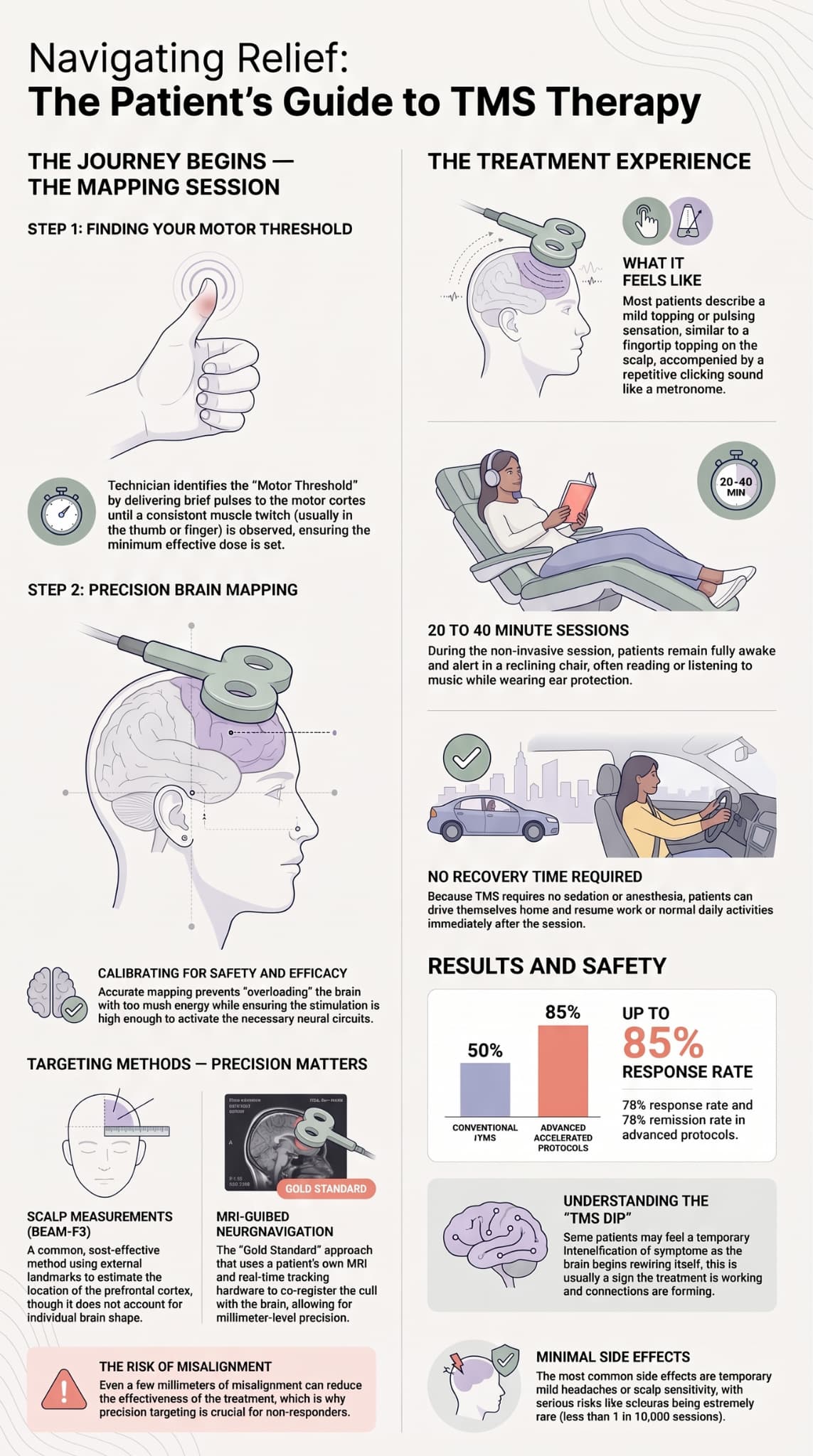
TMS uses an electromagnetic coil placed against the scalp. The coil delivers magnetic pulses to a selected area of the brain.
“rTMS is a noninvasive therapy that uses an electromagnet to stimulate the brain using repeated low-intensity pulses.” – National Institute of Mental Health (NIMH)
The patient remains awake during treatment. No general anesthesia is required for standard rTMS.
During a session, the patient may hear clicking sounds and feel tapping or pressure near the treatment area. The sensation can vary based on the device, coil position, stimulation settings, and individual sensitivity.
The first appointment may take more time because the clinician must identify the treatment position and determine the appropriate stimulation level.
How Often Are TMS Sessions Needed?
A common conventional rTMS schedule involves treatment five days per week for about four to six weeks. Some clinical protocols use different schedules.
A 2019 randomized study compared treatment protocols lasting about 18.75 minutes and 37.5 minutes, with treatment provided five days per week. Newer theta-burst protocols can be shorter.
Shorter does not mean appropriate for every patient. The treatment schedule depends on the device, indication, protocol, and clinical plan.
| Treatment factor | Typical information |
| Session length | Protocol dependent |
| Frequency | Often 5 sessions weekly |
| Course length | Often 4 to 6 weeks |
| Setting | Outpatient office |
| Anesthesia | Usually not required |
| Monitoring | Symptoms and side effects |
Can Patients Work or Drive After TMS?
Standard TMS does not require general anesthesia or sedation. Patients generally remain alert during and after treatment.
Mayo Clinic states that patients typically do not need someone to drive them home after rTMS. Individual instructions can differ, especially after an initial session.
If significant headache, lightheadedness, discomfort, or another unexpected symptom occurs, the treating clinician should provide guidance before normal activities resume.
Is Transcranial Magnetic Stimulation Safe for Everyone?
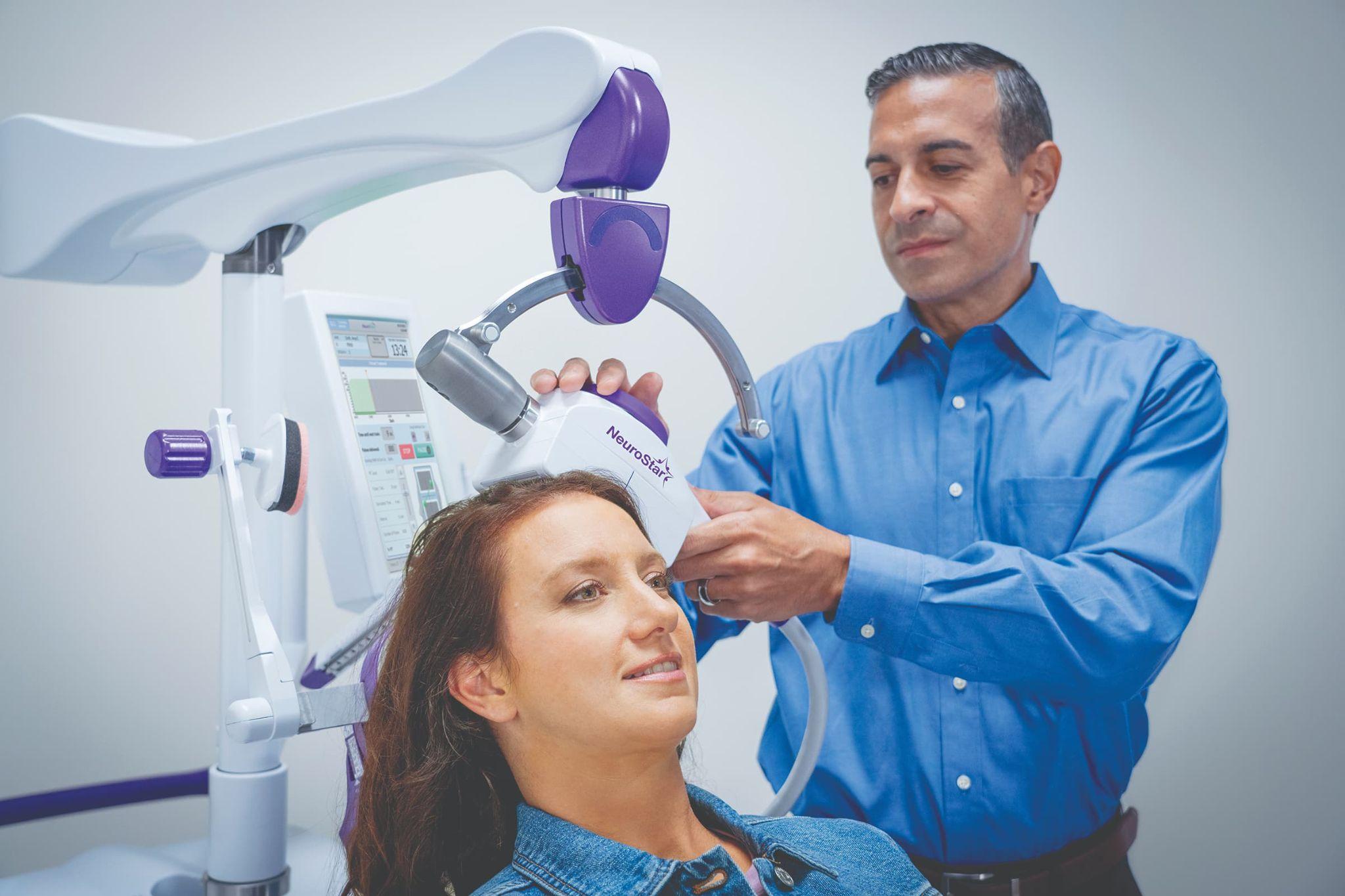
TMS is generally well tolerated, but it is not right for everyone. A proper screening should happen before treatment.
The clinician should ask about metal near the head, implanted devices, seizure history, neurological conditions, and current medications. These details can affect whether TMS is safe.
Common side effects include headache, scalp discomfort, tingling, and facial twitching. They are usually temporary.
“Generally, rTMS is considered safe and well-tolerated.” – Mayo Clinic
Seizures are rare, but they can happen. Mood changes, including mania, can also occur in some patients.
So safety screening matters.
Who May Need Extra Screening Before TMS?
Patients with certain implants or metal near the head may need extra screening. This can include some cochlear implants, aneurysm clips, deep brain stimulators, and other implanted devices.
A history of seizures also needs careful review.
Dental fillings usually are not the same concern as certain metal or electronic devices near the treatment area. Still, the clinician should make the final decision.
Do not guess about an implant.
How Much Does TMS Treatment Cost?

TMS costs vary by provider and treatment plan. The total price can depend on the number of sessions, the TMS protocol, the psychiatric evaluation, follow-up visits, and insurance coverage.
Ask for the full expected cost before treatment starts. A per session price does not always show the total expense.
Does Insurance Cover TMS Treatment?
Some insurance plans cover TMS for major depressive disorder when certain requirements are met. These requirements can include previous antidepressant treatment and documentation of limited improvement.
Coverage varies by plan.
Before treatment, ask the clinic to check insurance benefits and prior authorization requirements. At Center for Psychiatric Wellness, we assist with insurance verification and prior authorization. Coverage still depends on the patient’s individual plan.
Choose a TMS Provider With Your Care in Mind
Choosing a TMS provider means making sure the treatment fits your diagnosis, medical history, and schedule. The provider should clearly explain eligibility, safety, treatment length, and costs. The details matter.
Center for Psychiatric Wellness offers NeuroStar TMS with psychiatric evaluation and ongoing care. A consultation can help you decide whether TMS is appropriate and what treatment plan may fit your needs.
FAQs
What Happens If TMS Does Not Work?
The clinician can review the diagnosis, treatment settings, medication plan, and progress. Another treatment option may also be discussed.
More sessions are not always the answer.
Can TMS Be Combined With Antidepressants or Therapy?
Yes. TMS can be part of a broader psychiatric treatment plan. Medication and therapy may continue when clinically appropriate.
Do not stop or change medication without speaking with the prescribing clinician.
How Soon Can You Tell If TMS Is Working?
Some patients notice changes during treatment, while others need more time. The clinical team can track symptoms throughout the treatment course.
If progress is limited, the treatment plan can be reviewed.
Can TMS Be Used With a Pacemaker or Cochlear Implant?
Some implanted devices may create safety concerns. Tell the clinician about any pacemaker, cochlear implant, brain stimulator, aneurysm clip, or other implanted device.
The specific device and its location need to be reviewed before treatment.
How should I evaluate a TMS therapy provider near me?
Look closely at their clinical credentials rather than proximity alone. Ensure the facility provides comprehensive psychiatric evaluations, utilizes FDA-cleared equipment, conducts rigorous safety screenings, and offers clear guidance on insurance verification and ongoing progress monitoring.
References
- https://www.nimh.nih.gov/health/topics/brain-stimulation-therapies/brain-stimulation-therapies
- https://www.mayoclinic.org/tests-procedures/transcranial-magnetic-stimulation/about/pac-20384625


