TMS Therapy For Post-Traumatic Stress Disorder (PTSD)
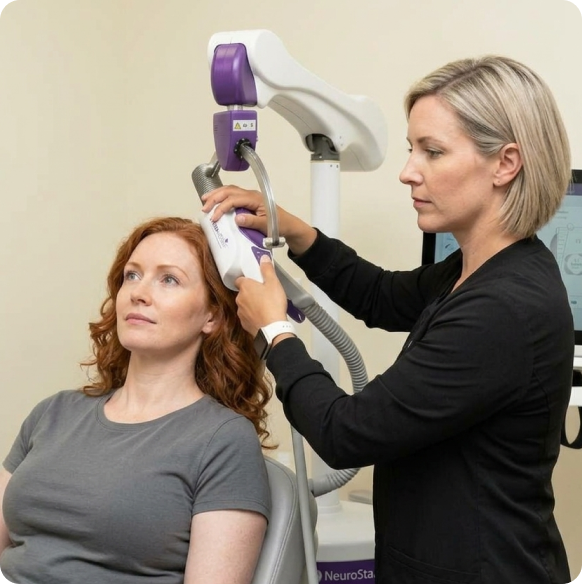
At the Center for Psychiatric Wellness in Fort Smith, our team understands that TMS Therapy for Post-Traumatic Stress Disorder affects both neurobiology and emotional well-being. We offer this treatment alongside comprehensive psychiatric evaluations and trauma-informed therapy. This non-invasive approach uses Transcranial Magnetic Stimulation to calm an overactive nervous system and support lasting trauma recovery.
of adults in the United States will experience PTSD during their lifetime, with many continuing to experience persistent hyperarousal despite first-line care.
Unlike conventional oral medications, TMS for PTSD directly modulates hyperactive fear circuits between the prefrontal cortex and amygdala, reducing chronic fight-or-flight triggers without systemic sedation or cognitive fog.
What PTSD Actually Feels Like
PTSD is more than a painful memory. It is a condition in which the brain’s threat-detection system becomes overactive and stays that way. The parts of the brain involved in fear, memory, and decision-making can become out of sync, keeping the nervous system on high alert even when there is no present danger.
For someone living with post-traumatic stress disorder, the world can feel unsafe in ways that are hard to describe. A loud noise, a certain smell, or a familiar place can suddenly bring the trauma back as if it were happening again. Sleep may feel impossible. Concentration may slip. Trust may become difficult. Relationships may suffer because it is hard to feel present or connected.
Not everyone who experiences trauma develops PTSD, and those who do may experience it in different ways. Some people have symptoms daily, while others have good days and difficult days.
Common Signs and Symptoms
PTSD symptoms are often grouped into four categories. Not everyone experiences all of them.
Re-experiencing the Trauma
Flashbacks that feel like the trauma is happening again.
Nightmares about the event.
Intense distress when reminded of what happened.
Avoidance
Staying away from places, people, or activities that bring back memories.
Avoiding talking or thinking about the traumatic event.
Feeling On Edge
Being easily startled or jumpy.
Always feeling on guard or alert.
Trouble sleeping or concentrating.
Irritability or angry outbursts.
Negative Changes in Mood or Thinking
Feeling disconnected from others.
Losing interest in things that used to bring joy.
Difficulty trusting people.
Feeling numb or emotionally shut down.
Why PTSD Can Be Difficult to Treat
Trauma affects both the mind and the body, and recovery often involves more than one approach. Several factors can make PTSD more complex to treat:
Neurological Hyper-Reactivity — Severe trauma dysregulates the communication between the prefrontal cortex (executive control) and the amygdala (the brain’s threat center). When this circuit gets locked in survival mode, verbal reassurance and oral medications alone may struggle to calm the physiological alarm.
High Co-occurrence with Major Depression — Over 50% of individuals diagnosed with PTSD also experience major depressive episodes, compounding emotional numbness and executive fatigue.
Avoidance & Cognitive Overwhelm — Engaging in trauma-focused therapy requires emotional bandwidth. When anxiety and hyperarousal are at peak intensity, patients may find talk therapy too overwhelming to tolerate.
Medication Limitations — Standard antidepressants can take weeks to yield partial benefits and frequently carry sedative or blunting side effects that interfere with daily recovery.
By directly addressing the underlying neurocircuitry, neuromodulation via TMS offers a non-pharmaceutical avenue to help stabilize baseline arousal, making therapeutic processing far more accessible.
How TMS Therapy Treats PTSD
Recovery from trauma is multifaceted, and TMS is one of the most direct ways to address what’s happening in the brain. TMS treatment for PTSD is an FDA-cleared, non-invasive approach that uses gentle, focused magnetic pulses to modulate brain regions affected by severe stress and trauma.
By stimulating underactive prefrontal circuits and down-regulating overactive fear networks, TMS for PTSD can relieve persistent intrusive memories, sleep disturbances, and emotional numbness. Sessions last about 20 to 30 minutes, require no anesthesia, and have no systemic sedative effects. Patients resume daily life immediately after each visit.
TMS is often used alongside other forms of care. The table below outlines how each option fits into a broader trauma recovery plan.
Other Options to Explore
Treatment Path
Focus for Trauma & PTSD
Key Advantages
TMS Therapy
Restores balance between prefrontal and fear-response networks
Non-invasive, non-systemic, no sedation, helps quiet physical fight-or-flight
Trauma-Focused Therapy (EMDR/CBT)
Safely processes traumatic memories and desensitizes triggers
Structured, long-term cognitive and emotional reprocessing
Medication Management
Modulates serotonin/norepinephrine levels
Provides baseline symptom stability alongside active therapies
Ketamine Therapy
Rapid modulation of glutamate neurotransmission
Fast-acting relief for acute, treatment-resistant distress
If traditional methods have not provided sufficient relief or if trauma symptoms continue to impact your quality of life, an advanced evaluation can help clarify your options
Therapy or medications have yielded only partial relief
You have engaged in standard care, but flashbacks, severe anxiety, or persistent low mood remain disruptive.
Chronic fight-or-flight makes daily life exhausting
Your nervous system stays continuously on alert, resulting in intense startle responses, insomnia, or irritability.
Medication side effects limit your treatment
Unmanageable fatigue, weight changes, or emotional blunting make ongoing pharmacological adjustments unsustainable.
You are seeking non-invasive neuromodulation
You want an evidence-based option that directly targets the brain circuits underlying trauma, either alongside psychotherapy or as a non-drug intervention.
What is the difference between a normal stress reaction and PTSD?
It is natural to feel upset, anxious, or shaken after a traumatic event. PTSD is distinguished when intrusive symptoms, hyperarousal, and emotional avoidance persist for more than a month and significantly impair day-to-day life, work, or relationships. A formal psychiatric evaluation can help determine whether your symptoms reflect acute stress or clinical PTSD.
How does TMS for PTSD help with trauma symptoms?
Traumatic events alter brain connectivity, frequently causing the amygdala (the brain’s fear center) to become hyperactive while the prefrontal cortex (responsible for regulating emotional responses) becomes underactive. TMS treatment for PTSD delivers gentle, focused magnetic pulses to stimulate prefrontal neural networks, helping the brain rebuild emotional control and reducing chronic hyperarousal and intrusive symptoms.
Can TMS for PTSD be combined with psychotherapy or medications?
Yes. TMS treatment for PTSD is frequently used alongside trauma therapies like EMDR or CBT, as well as existing medications. By calming physical hyperarousal and improving mental clarity, it often helps patients engage more comfortably in therapy sessions without feeling overwhelmed by trauma reminders.
What should I expect during a TMS treatment session for trauma?
TMS is an outpatient procedure performed while you relax in a comfortable treatment chair. A small magnetic coil is placed gently against your head to deliver targeted magnetic pulses. Sessions typically last between 20 and 30 minutes, 5 days per week over several weeks. There is no sedation or grogginess, meaning you can drive yourself to and from appointments and immediately return to your normal routine.
Does insurance cover treatment for PTSD and TMS?
Most major commercial insurance providers and Medicare cover comprehensive psychiatric evaluations, trauma psychotherapy, and medication management. When PTSD co-occurs with major depressive disorder, TMS therapy is widely covered by insurers when standard antidepressant trials have proven insufficient. Our Fort Smith team will verify your specific insurance benefits and review all coverage guidelines before starting care.
Do I need to talk about my trauma in detail right away?
No. Safe trauma care requires trust and stability. Our clinical team works at your pace, focusing initially on stabilization, physical regulation (such as with TMS or symptom management), and emotional grounding before beginning deeper trauma processing.
Take the Next Step Toward Lasting Trauma Recovery
Healing from trauma is possible, and it does not have to happen alone. Our team at Center for Psychiatric Wellness is here to provide compassionate, respectful care, at a pace that feels right for you.
Additional locations: Van Buren, AR, and Arkoma, AR
Request Your Free TMS Consultation
Fill out the form below. A team member from Center for Psychiatric Wellness will call you within one business day to verify insurance and schedule your psychiatric evaluation.